7Kbet / Brazil / Table games
7kbet: roulette, blackjack, baccarat, and poker in table games
In table games, the appeal lies less in the spectacle and more in reading the format. At 7kbet, roulette, blackjack, baccarat, and poker stand out for different reasons: one depends on the luck of the spin, another mixes decision-making and hand counting, another is more straightforward, and the last requires reading the table and opponents.
External access · Check conditions and availability at the destination.
↗ Browse by interest◷ At your own pace18+ Make a conscious choice

7Kbet · visual selectionBRAZIL / 18+
Get to know it before choosing.More context. Less rush.
A place for every interest
Continue the discovery.
Compare rhythms and formats. Start with the topic that makes sense for you.

games / 02
Live casino
Understand the pace and formats of the tables with live streaming.
Learn about live casino ↗
In a few wordsRoulette, blackjack, baccarat, and poker are table games with very different dynamics. Roulette revolves around numbers and colors; blackjack calls for decisions on whether to hit or stand; baccarat is simpler, with a focus on betting on the chosen side; and poker depends on hands, positions, and reading opponents. At 7kbet, the best comparison is by format, player involvement, and the speed of each round.
By 7Kbet Editorial TeamEditorial content · Brazilian Portuguese
To choose well, it is worth comparing pace, rules, interaction, and the kind of decision each game asks for before sitting down to play.
One step at a time
Start with clarity.
1. Identify the type of table
Start by separating roulette, blackjack, baccarat, and poker by their basic format. This avoids comparing games with different logic as if they were the same.
2. Read the table rules
See what changes between versions of the same game. Small variations alter decisions, pace, and round reading.
3. Compare the level of involvement
Assess whether you want to just follow the result, make decisions on every hand, or observe other players more closely.
4. Choose by the style of experience
Use the game that matches your preferred pace: visual, tactical, streamlined, or interpretive. This makes the table more aligned with what you are looking for.
Look beyond the first click
Compare what matters.
Reading criteria, not betting recommendations.
| Criterion | What to observe | How to evaluate |
|---|---|---|
| Round format | If the action depends on a spin, cards, or a showdown between players | See whether the table is more visual, more tactical, or more social |
| Player involvement | How many decisions can be made during the round | Compare games with low, medium, and high involvement |
| Pace | Time between one round and the next and hand duration | Observe whether the table is fast, smooth, or more analytical |
| Rules | Variations that change the experience | Read the table rule before comparing it with another |
| Probability | How the game distributes hits and risks | Understand whether the chance depends on choice, luck, or reading |
| Game profile | Whether the focus is observation, decision-making, or interaction | Choose the format that matches the way you follow the table |
Context for deciding
Inside each choice.
Explanations to consult now and revisit when needed.
Roulette: the most visual game at the table
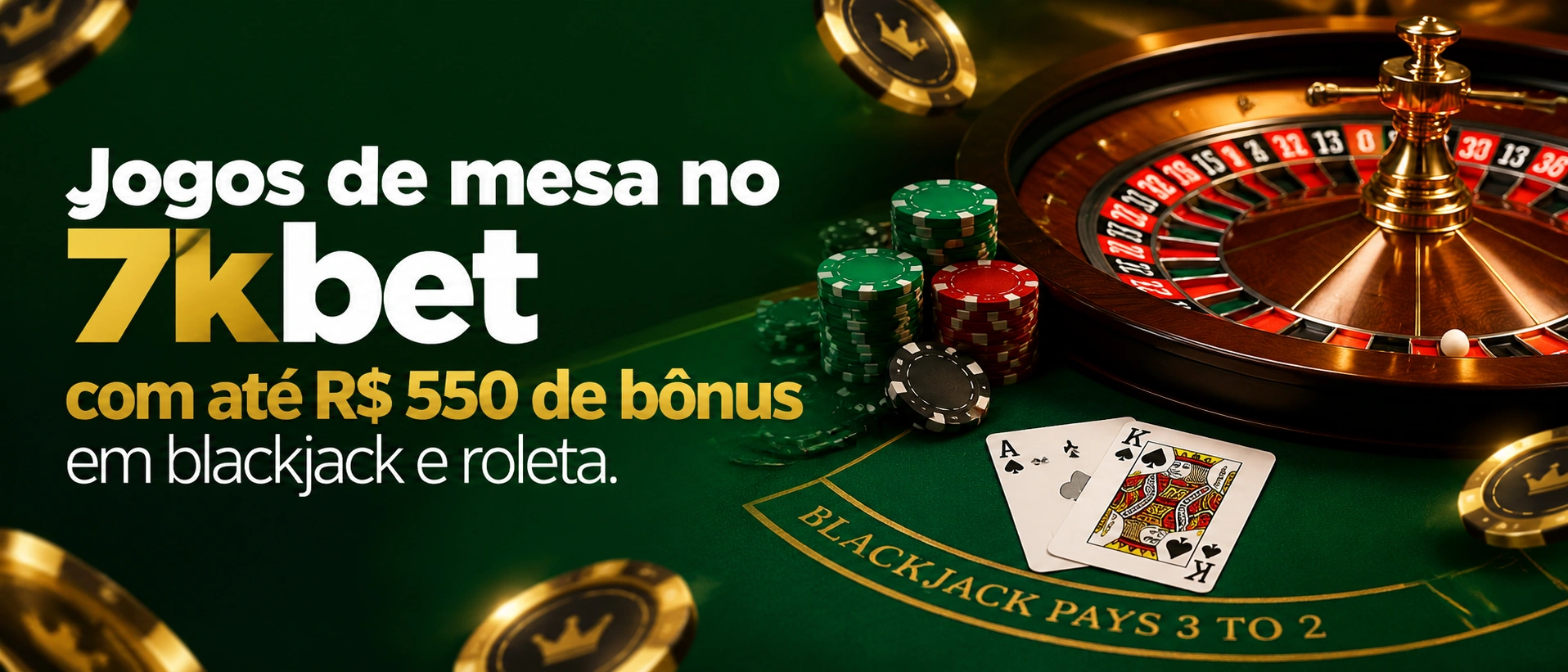
Roulette is the game that most feels like a moving panel. The center of the action is the wheel, the numbers, and the colors, and the reading is immediate: the bet can target a number, a range of numbers, or groups like red and black. Its appeal lies precisely in its visual simplicity. In a round, anyone following along quickly understands what is at stake, even without knowing technical details.
Blackjack: a decision with every card
Blackjack completely changes the mood at the table. Instead of waiting only for the final result, the player decides whether to hit, stand, double down in certain situations, or split pairs when the rules allow it. The goal is to get close to 21 without going over, while also beating the dealer's hand. This makes the game feel more tactical than roulette, because each card changes the scenario.
Baccarat: streamlined format and quick reading
Baccarat has one of the cleanest structures among table games. In general, the choice comes down to betting on the player side, the banker side, or the tie. After that, the round proceeds with little interference from the bettor. This makes the game very easy to follow for anyone who wants something fast, without needing to memorize many decisions during the hand.
Poker: table reading, position, and hands
Poker is the most social and the most interpretive of the four. Here, it is not enough to look only at your own hand; you need to consider table position, betting sequence, other players' behavior, and the relative strength of combinations. In poker tables, the round depends not only on the cards dealt, but also on the decisions accumulated throughout the hand. That is why it usually attracts those who like to observe patterns and think a few steps ahead.
Probabilities without formulas: what changes from one game to another
When the topic is probability, the best approach is to think about structure, not math. In roulette, each spin is independent and the result comes from a broad set of possibilities. In blackjack, the chance of improving or worsening the hand depends on the cards already seen and the decisions made. In baccarat, the reading is simpler because the bet focuses on a few main outcomes. In poker, probability interacts with incomplete information, which makes everything more complex.
Game pace: which table suits each profile
If the idea is to enter and leave a round without much learning curve, roulette and baccarat are usually more immediate. If the preference is to participate actively, blackjack offers more choices. If the interest is in reading behavior and a longer table game, poker stands out. Comparing only the game name is not enough; what really changes is the sense of time at the table.
Rules and variations: small details that change the experience
That is why, when comparing games at 7kbet, it is worth looking first at the basic rule and then at the table variation. A simple example: two blackjack tables may seem identical, but have different conditions for certain plays. In poker, a shorter table does not behave like a full table. In roulette, the list of bets changes the way the player sees risk. The game name is only the beginning; the concrete rule is what defines the real experience.
No complications
Questions that deserve answers.
Open a topic to understand the essentials. For access conditions and offers, check the indicated destination.
What is the main difference between roulette and blackjack?
Roulette revolves around a luck-based result after the spin, while blackjack requires decisions during the hand. In roulette, the player chooses the bet and follows the outcome. In blackjack, each card can change the strategy, so participation is greater and table reading is more active.
Is baccarat simpler than the other table games?
In general, yes. Baccarat usually has a few main betting options and a quick read of the round. That does not mean it is the same at every table, but the structure is usually more straightforward than blackjack or poker, which require more decisions and analysis.
Is poker the most strategic game among these four?
It is usually the most interpretive, because it involves hands, position, betting sequence, and reading opponents. Instead of relying only on the cards, poker considers behavior and table context. That is why the sense of strategy is more evident than in the other table games.
How to compare probabilities without using formulas?
The way is to look at the structure of the game. See whether the chance depends on a spin, a decision about cards, a few main bets, or reading between players. That makes it easier to understand how each game distributes risk and hit frequency, without needing to get into math.
Which table game is faster?
It depends on the table, but baccarat and roulette usually have a more direct pace. Blackjack sits in the middle, because there are decisions in every hand. Poker tends to be the slowest, since it involves more analysis and exchange of actions among participants before the round ends.
What matters more when choosing a game: rules or style?
Both matter, but style helps narrow it down better. First, see whether you prefer spin, decision, simplicity, or table reading. Then check the rules of the available version, because small variations change the experience a lot. In table games, form and rules go hand in hand.